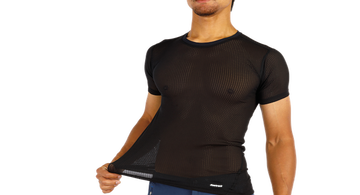
Similar Looks, Different Concepts
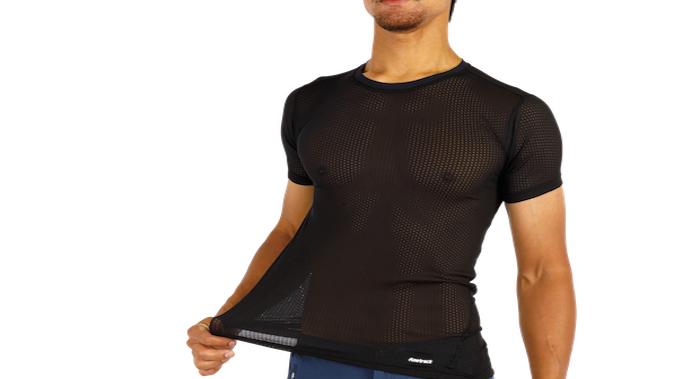
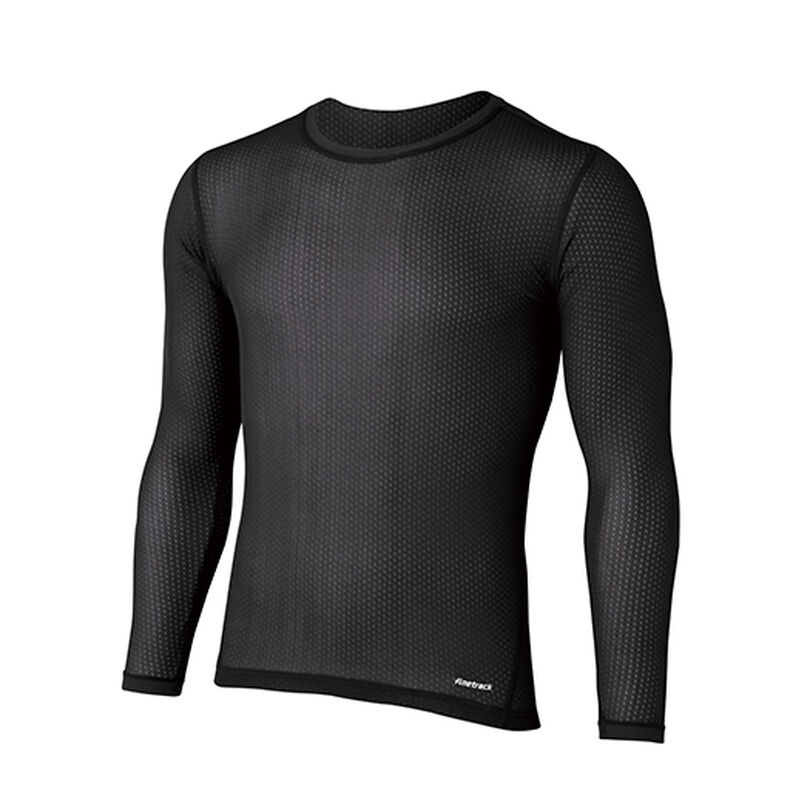
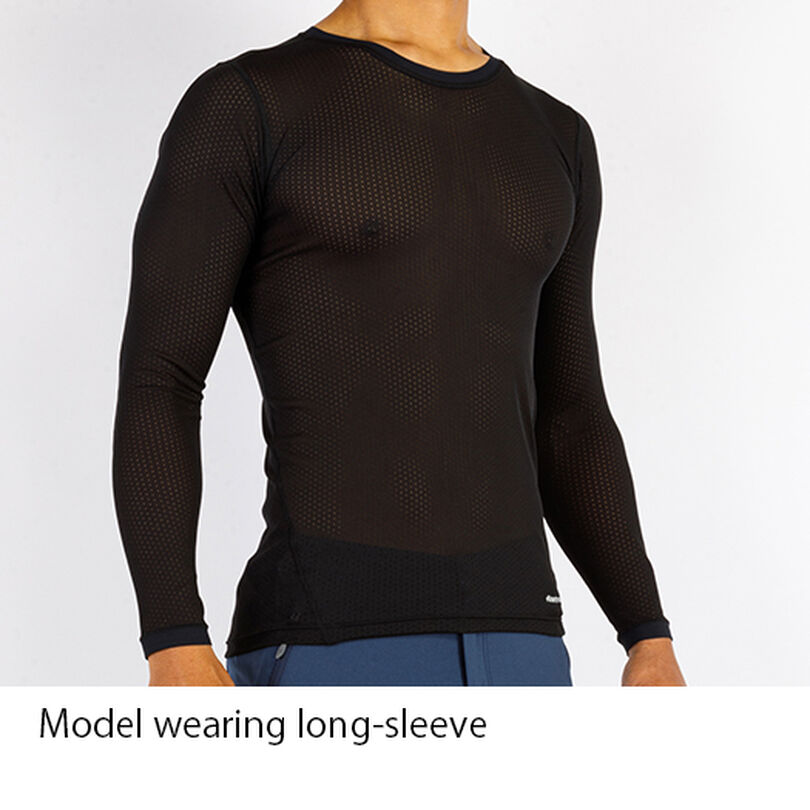
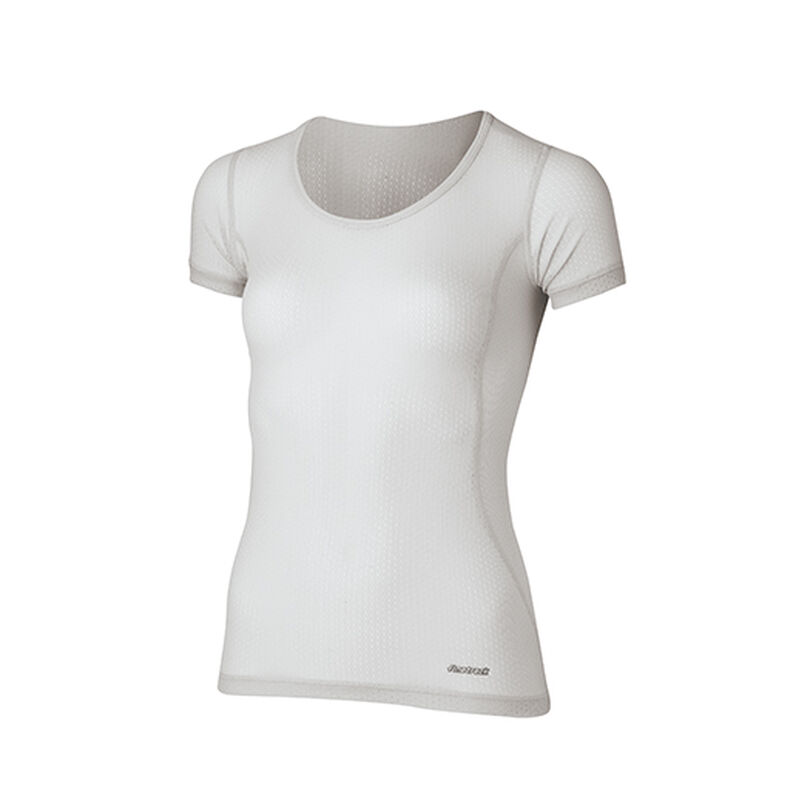
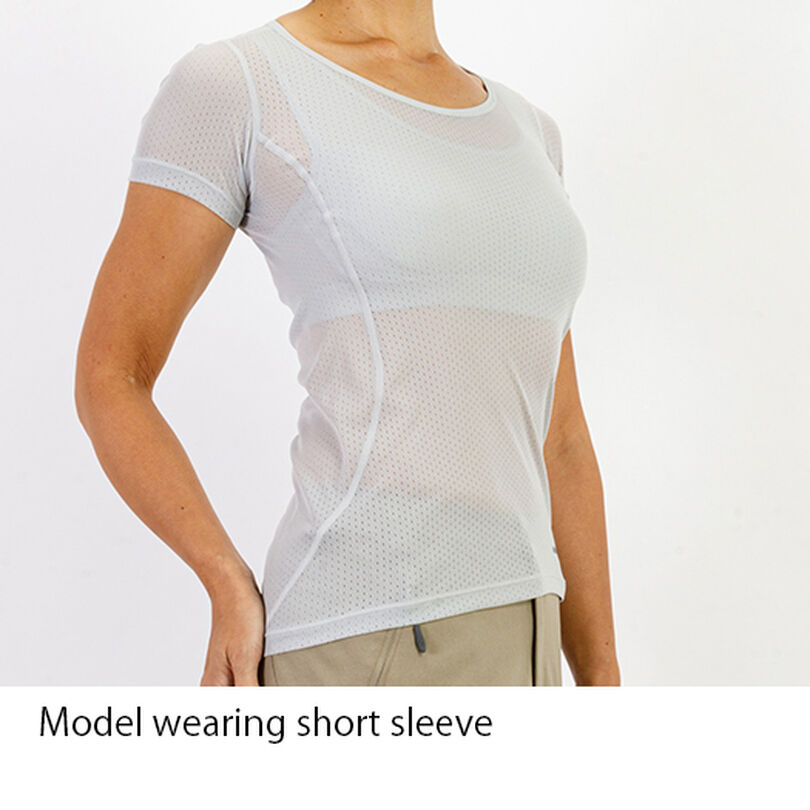
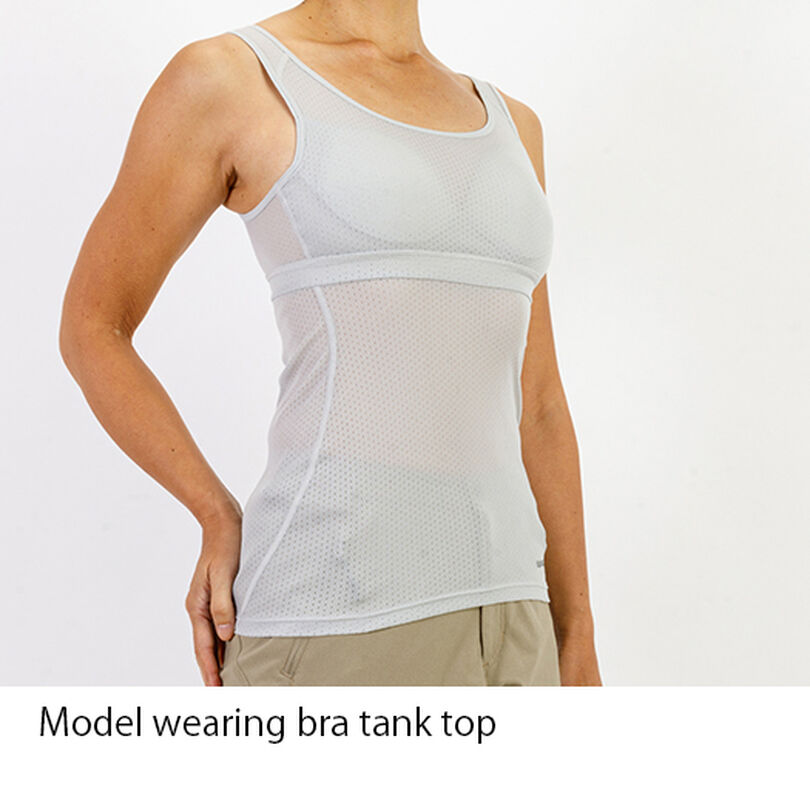
At first glance, Finetrack’s Elemental Layer and other so-called fishnet or mesh base layers can look quite similar. Open structures, visible holes, lightweight construction. It’s easy to assume they serve the same purpose.
In reality, these garments are built on different concepts, designed to solve different moisture problems under different conditions.
Understanding those differences is key to choosing the right system for your activity, environment, and sweat rate.
1. Layer Category
Base Layer vs. Boundary Layer
Most mesh or fishnet-style garments on the market are best understood as base layers, or extensions of the base layer category, because their function is based on a wick-and-dry approach.
Their primary role is to:
- Wick liquid sweat away from the skin
- Move that moisture outward
- Dry as quickly as possible
Larger mesh openings increase airflow and surface contact, which can accelerate evaporation. This works extremely well in activities where continuous evaporation is possible, such as cycling, trail running, or high-output movement in dry conditions.
The Elemental Layer is different.
The Elemental Layer is water-repellent, not hydrophilic. Because it doesn't wick, it is not categorized as a base layer.
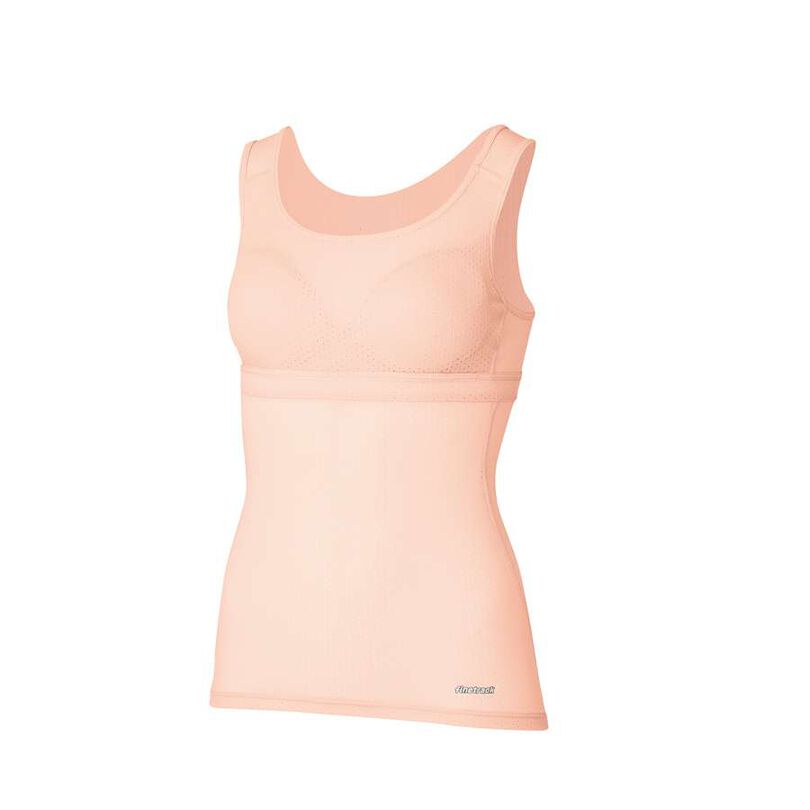
Its primary function is to act as a boundary layer, helping protect the skin from direct contact with moisture. The Elemental Layer is designed to be paired with a moisture-wicking base layer worn above it, rather than replacing the base layer altogether.
In this paired system:
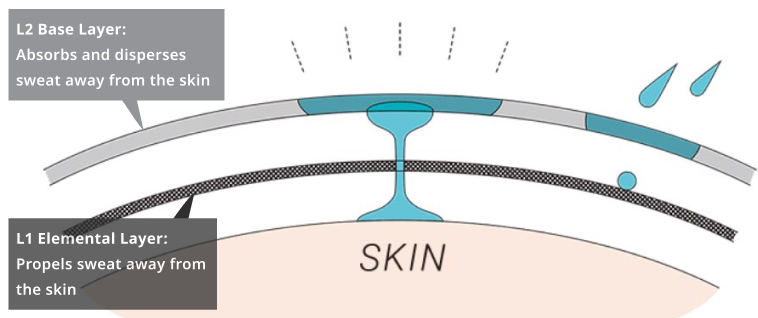
- The Elemental Layer allows sweat to pass through the mesh openings to the base layer above
- The base layer provides capillary pull and evaporation
- The Elemental Layer then acts as a barrier, helping prevent the skin from staying in contact with a sweat-soaked base layer
The Elemental Layer, is designed to work together with a moisture-wicking base layer as part of a system, rather than as a standalone solution. By separating roles between layers, it focuses on managing liquid contact at the skin while relying on the base layer above for capillary pull and evaporation, instead of trying to perform all moisture functions within a single garment.
.jpg?sw=768)
2. Single-Layer Solution vs. Paired System Design
Because of the wick-and-dry approach described above, most mesh base layers are designed to work, or can work, as a single layer, handling sweat transport and drying on their own.
The Elemental Layer is different. It is intentionally designed to function with a base layer as a system, where each layer has a clearly defined role. This separation of roles helps minimize the time the skin is in direct contact with a sweat-soaked layer.
To understand why this matters, it’s important to look at how moisture behaves in real-world conditions.
3. Inside-Out Only vs. Protection in Both Directions
Moisture Movement Is Not Always One-Way
You might reasonably ask:
Why wear two layers when one layer could do everything?
Most mesh base layers focus primarily on one-directional performance:
- Moving sweat from skin → outward (inside-out)
This approach works well when:
- Outer layers remain relatively dry
- Evaporation can keep up with sweat production
However, depending on the activity, environment, and total layering system, moisture does not only come from the body.
It can also come from:
- A soaked base or mid layer
- Condensation inside a shell
- Snow melt or rain penetrating outer layers
- Direct immersion in water (for water-based activities)
Elemental Layer addresses both directions.
The Elemental Layer is designed to allow sweat to escape outward while also reducing moisture migrating back toward the skin.
Some mesh base layers can provide a degree of outside-in protection, but doing so typically requires added loft to create a gap between the skin and fabric, which means more bulk and weight.
The Elemental Layer achieves this barrier protection with minimal bulk (and weight), helping reduce the body chill due to external moisture pressing back toward the body, especially during stops, belays, transitions, or low-output phases.

Conclusion
Different Tools for Different Conditions
Mesh base layers and the Elemental Layer are not competitors solving the same problem. They are different solutions designed for slightly different priorities.
They may look similar at first glance, but their intent, behavior, and ideal use cases are fundamentally different.
Understanding that difference allows you to build a layering system that truly works for your environment. Take a moment to review your own conditions and use case, and choose the solution that works best for you!
EXPLORE ELEMENTAL LAYERS
.jpg?sw=810 "FUM0422_sub-(1).jpg") New
New
 New
New
 New
New
 New
New