
The Hidden Limits of Breathability, and How to Find the Right Jacket for You
You picked a rain jacket with excellent breathability ratings, so why does it still feel steamy on the trail? That clammy feeling on the inside is all too familiar, and stopping for a break can leave you feeling surprisingly cold. The thing is, breathability numbers alone don't tell the whole story. Understanding how test methods work, what different membranes actually do, and where ventilation fits in can go a long way toward finding a jacket that genuinely keeps you comfortable.

High Specs, Still Steamy — What's Going On?
You chose a jacket with high breathability ratings, yet still noticed that steamy feeling during activity. The inside gets damp, and at rest stops you find yourself feeling the cold.
It's easy to accept this as "just how rain jackets are." But there's a reason that steamy feeling happens. There are factors that breathability numbers simply can't capture, and they have a real impact on how a jacket actually feels to wear. Look at things from a slightly different angle, and both the cause and ways to reduce it start to become clear.

That Steamy Feeling Is More Than Just Uncomfortable
Steaminess isn't just a comfort issue. When humidity builds up inside the jacket, it becomes harder to regulate your body temperature, making you prone to overheating during activity.
On top of that, when you stop moving, that trapped moisture turns cold against your skin. You end up putting on and taking off layers more often, disrupting your pace, and letting small stresses accumulate. Over time, this affects your overall performance and decision-making on the trail. That's why finding a jacket that reduces steaminess matters not just for comfort, but for the quality of your time on the mountain.

Three Things to Look at When Choosing a Less Steamy Jacket
So what should you focus on to reduce that steamy feeling? There are three key areas:
- Whether breathability was evaluated under conditions close to actual wear
- The type of membrane used and how it moves moisture
- Whether the jacket has ventilation to complement breathability
These aren't separate factors; they work together and have a significant impact on how a jacket actually feels. Let's look at each one in turn.
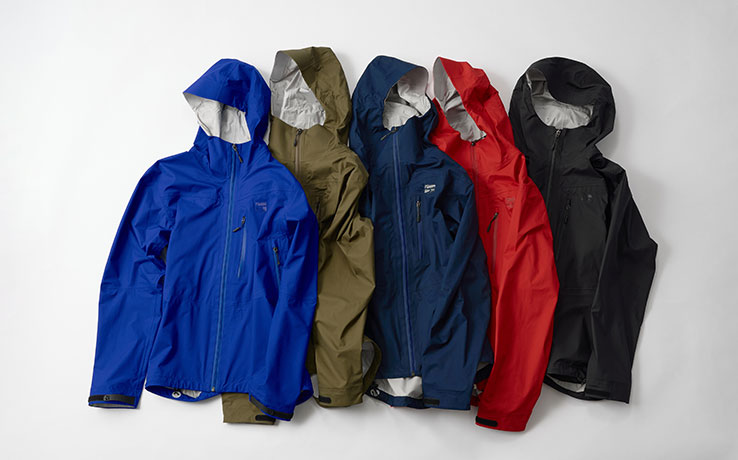
Breathability Numbers Can't Be Taken at Face Value
Many people refer to breathability ratings when choosing a rain jacket, which makes sense. But these numbers aren't as simple to compare as they might seem. The same material can produce very different figures depending on the test method used.
First, a quick look at how rain jackets are constructed. What appears to be a single layer of fabric is actually multiple layers bonded together. The most common structure is a three-layer system: an outer face fabric, a middle membrane layer, and an inner lining. The membrane is what does the work of keeping water out — and letting vapor escape. You never see it, but it has an outsized influence on how the jacket performs.
How that membrane is evaluated is where things get interesting.
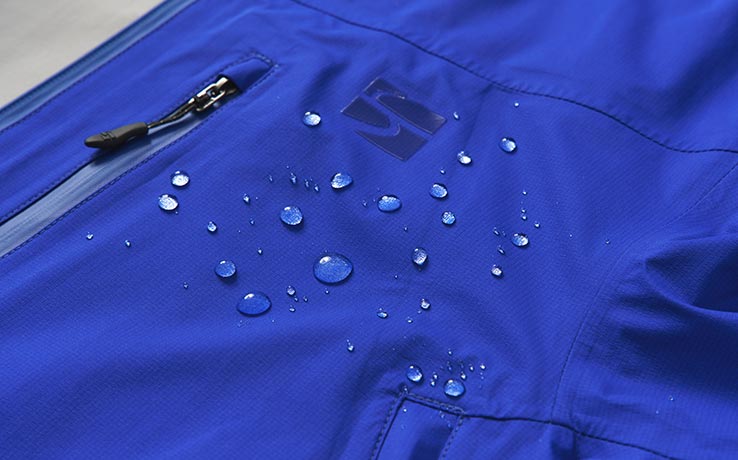
Two common testing standards in Japan are JIS L 1099 Method A-1 (calcium chloride method) and Method B-1 (potassium acetate method). Each measures something different, so the numbers they produce carry different meanings.
Method A-1 reproduces the state where humid air inside the garment is released outward. An air gap is created between the fabric and the desiccant, tested at 40°C and 90% humidity. The result reflects how vapor moves through the fabric closer to real wearing conditions. Because it's more realistic, the numbers tend to come out lower.
Method B-1 evaluates the membrane's maximum breathability potential by placing the fabric in direct contact with water. The numbers come out higher, but they don't necessarily reflect what happens during actual wear. Hydrophilic non-porous membranes tend to score especially high with this method.
In other words, each method measures something different. And since brands can choose which method they use, breathability numbers from different jackets aren't always directly comparable. What matters is understanding what conditions those numbers were measured under, not just how large they are.
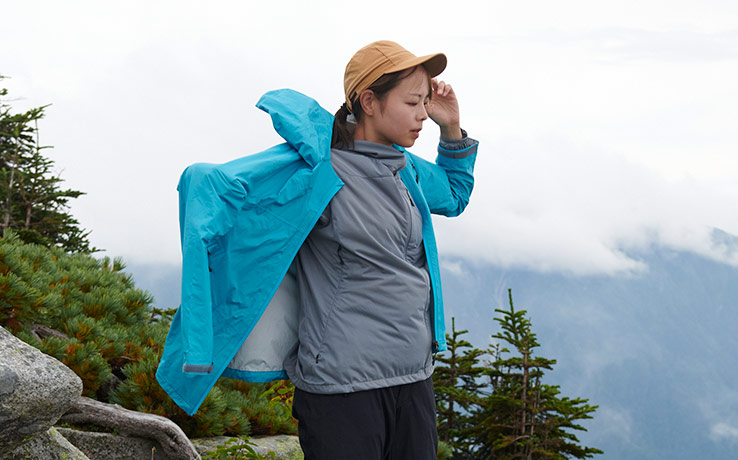
Breathability Works Differently Depending on the Membrane
Just as with test methods, the type of membrane itself has a significant impact on how breathability actually feels in use. There are two main types, and they move moisture in fundamentally different ways.
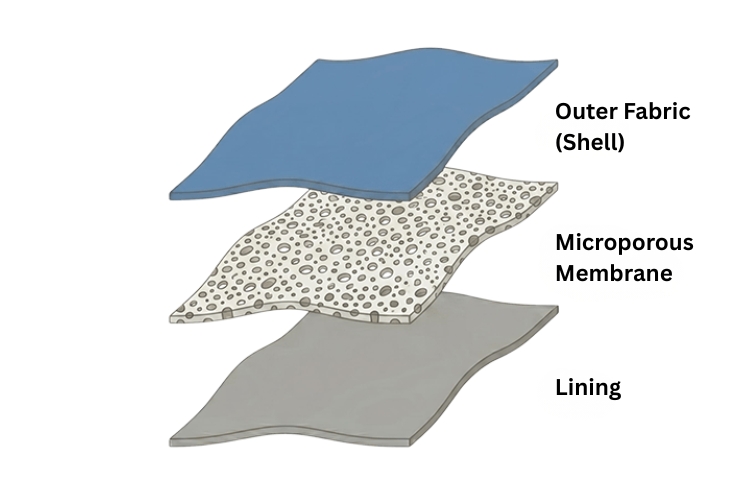
Microporous membranes allow water vapor to pass through millions of tiny physical pores, small enough to block water droplets, large enough to let vapor through. Because they work through a physical process, they start releasing moisture right away, making them well-suited for high-output activity. The tradeoff is that those pores can gradually clog with body oils and other residue, and the structure makes it harder to produce very thin, lightweight materials.
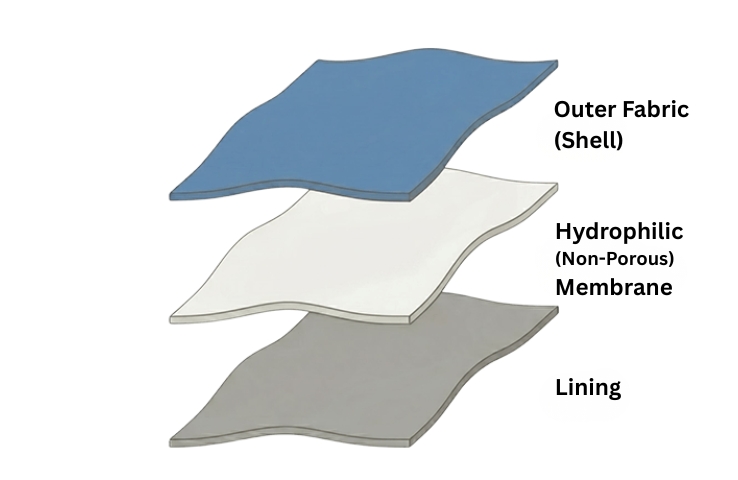
Hydrophilic (non-porous) membranes work differently. Rather than passing vapor through pores, they absorb moisture into the membrane material itself, then release it on the outer side. With no pores to clog, maintenance is simpler, and the result is often a softer, more supple feel. The catch is that there's a warm-up period before vapor transmission gets going.
Neither type is inherently better. The right choice depends on the conditions you typically face and how you move. It's also worth noting that non-porous membranes have been improving steadily, and some newer designs have addressed the slow start-up issue quite effectively. Both technologies continue to evolve, and it's not a simple matter of one being superior to the other.

There Are Situations Where Breathability Alone Isn't Enough
Imagine hiking a long uphill stretch in the rain. You start to feel heat building up inside your jacket. When you stop, the air goes still, and that warmth and humidity just sit there.
Even with a highly breathable fabric, this can happen, and there's a clear reason why. Breathability works on the principle of humidity differential — vapor moves from where concentration is higher (inside the jacket) to where it's lower (outside). But in mountain conditions during rain, the outside air is already humid, and fog or mist can close that gap further. Add warm temperatures and heavy exertion, and vapor production can outpace what the fabric can handle on its own.

That's Where Ventilation Comes In
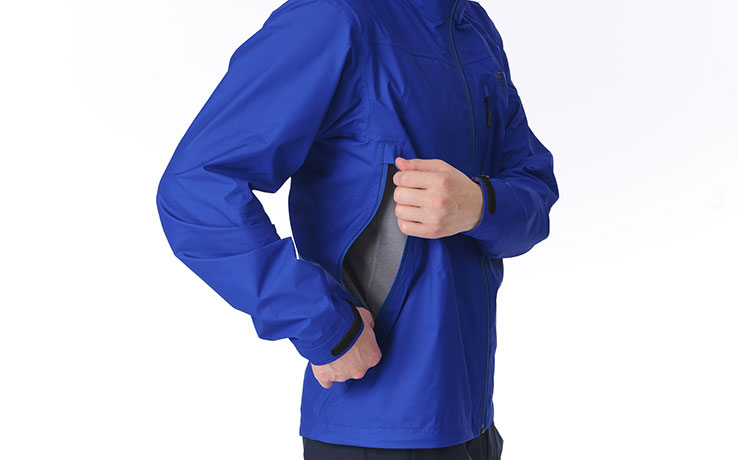
While breathability gradually moves vapor through the fabric, ventilation works differently — it expels air directly. Opening an underarm or chest zipper actively exchanges warm, humid air for cooler, drier air in an instant, making it much easier to regulate body temperature.
When choosing a jacket, it's worth looking beyond breathability numbers and paying attention to ventilation features as well. Consider whether the vents are positioned to work with a backpack on, whether they're easy to operate while moving, and whether the opening is large enough to make a real difference. These practical details have a significant impact on comfort in real mountain conditions.
Breathability and ventilation work best together — one quietly handling moisture on an ongoing basis, the other stepping in when conditions push past what the fabric alone can manage.
Understanding the Basics Makes the Difference
The steamy feeling inside a rain jacket isn't determined by breathability ratings alone. Test method differences, membrane structure, mountain humidity, and exertion level all combine to shape the experience.
That's why it's important to look beyond the numbers and understand the reasoning behind them. Considering the breathability test method, the type of membrane, and the ventilation design together will bring you closer to a jacket that genuinely reduces that steamy feeling.
Rain jackets aren't just for keeping the rain out; they're for supporting your movement and keeping you comfortable in challenging conditions. Keeping that in mind when you choose your next jacket might just change how you experience the mountain.

A Field-Ready Option Designed to Minimize That Steamy Feeling: Everbreath® Photon
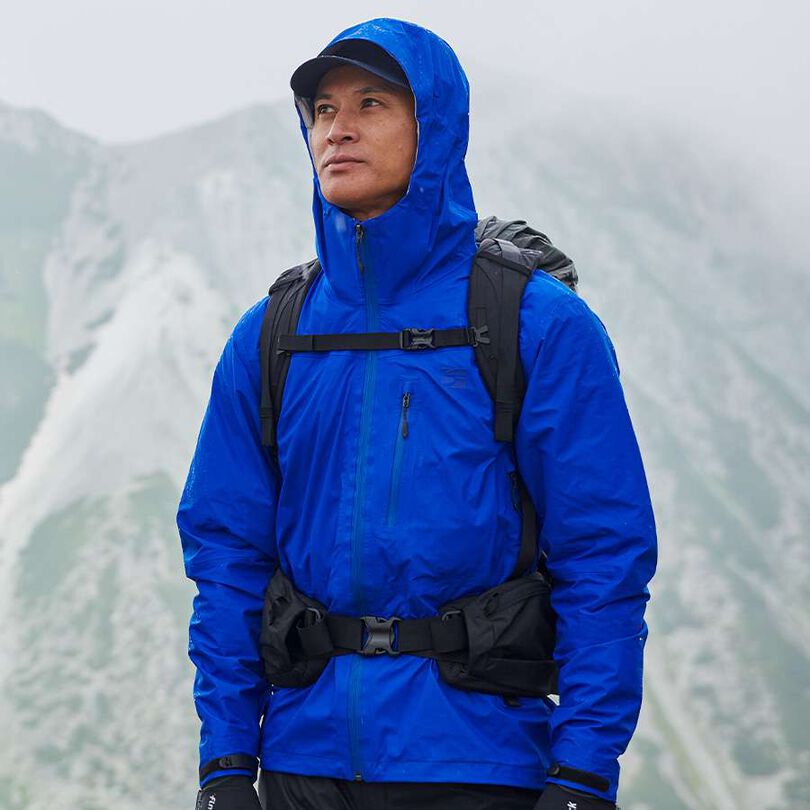
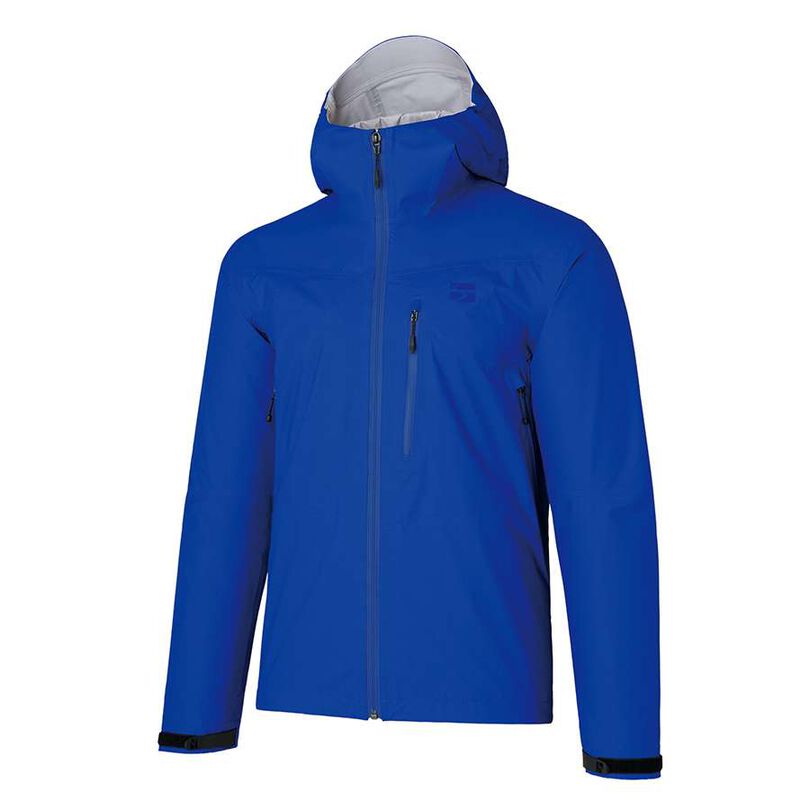
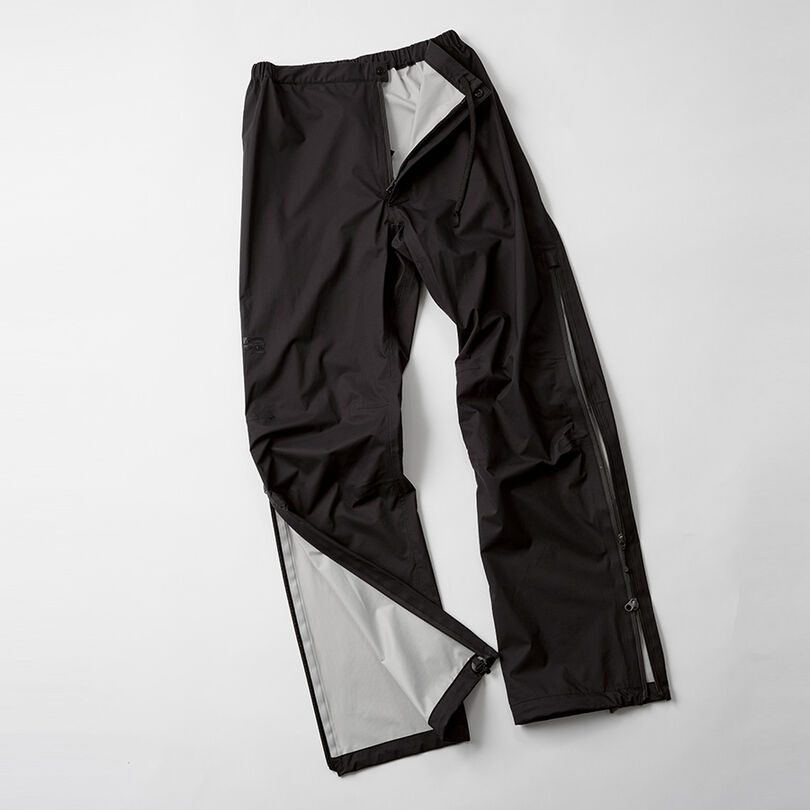
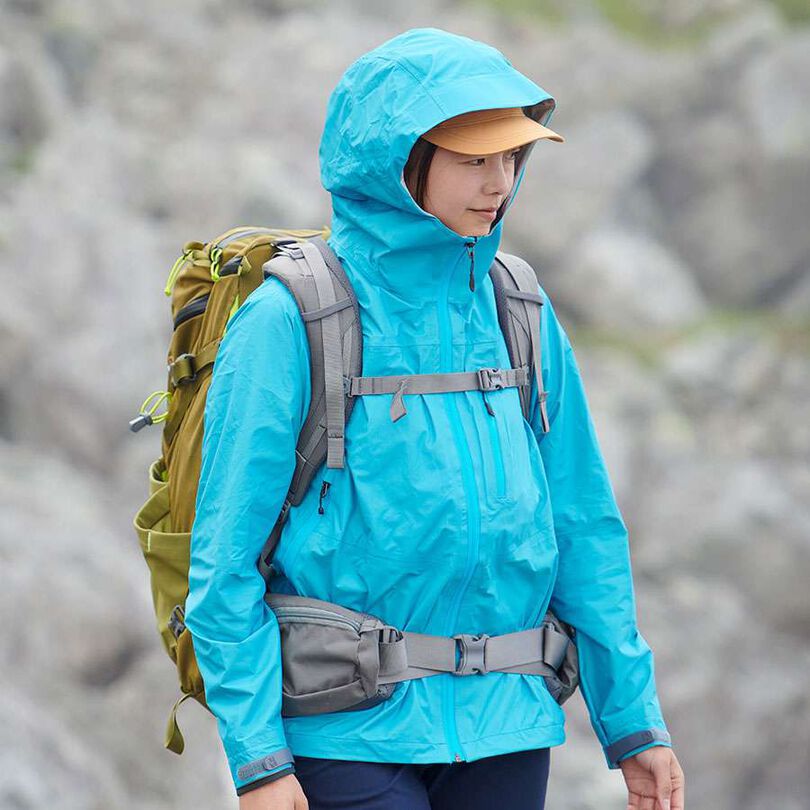
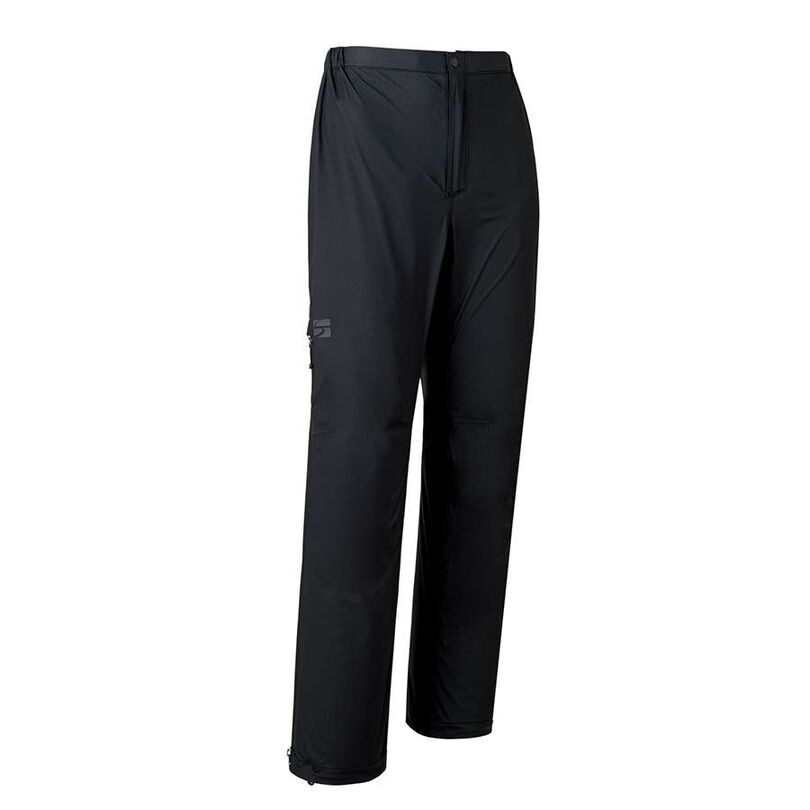
The Everbreath® Photon features Finetrack's proprietary waterproof-breathable material, Everbreath®, designed with a focus on breathability close to real wearing conditions to minimize that steamy feeling. Highly stretchy and supple fabric combined with easy-to-use ventilation make it a jacket you can keep moving in, even in the rain.
EXPLORE Everbreath® Photon Series
 New
New
 New
New

 New
New
 New
New